99th Regiment of Foot - (Duke of Edinburgh) Lanarkshire Volunteers
Ships to Australia 1842 - 1844
The 99th regiment of foot was first raised in 1760 and was disbanded several times before being raised in 1824 as the 99th (Lanarkshire) Regiment of Foot. The 99th arrived in Australia in 1842 -1844. Detachments served in Hobart, Sydney, Newcastle, Norfolk Island, New Zealand and Victoria at various times.
Commanding officer of the 99th was Lieutenant Colonel Henry Despard.
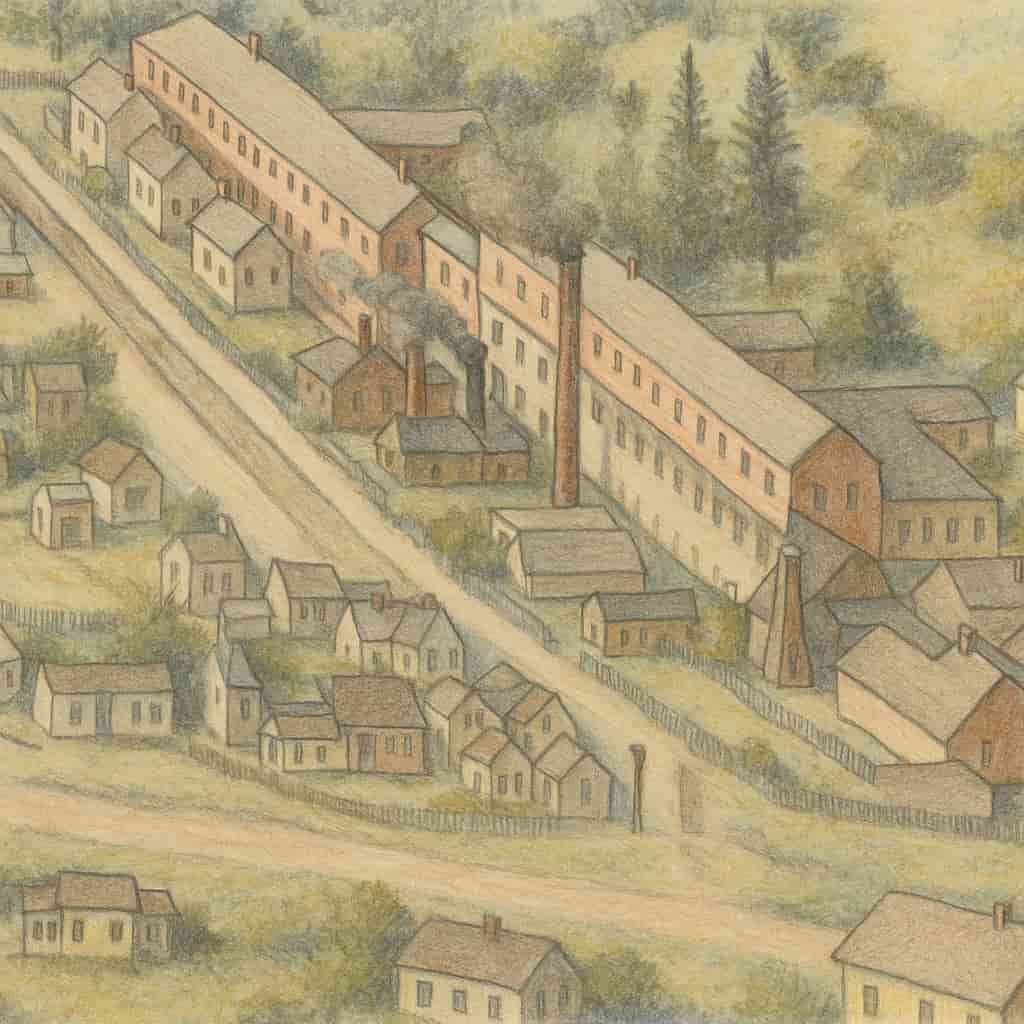
At Newcastle the detachment of the 99th stationed there were quartered in the new Military Barracks, the long building seen in the image below
An ill-feeling existed between the soldiers of the 99th and the townsfolk at Newcastle. The following correspondence to the Maitland Mercury describes the cause of some of the trouble:
GENTLEMEN- A letter appeared in your paper of Saturday last, dated "Newcastle, 23rd Nov., 1843," and signed "Civilian," which has brought before you and the public a number of charges, seriously affecting the character of the military stationed here, who amount to about 200, principally recruits, tied to each other by the strongest ties of friendship ; and who are, with the exception of some half-dozen, perfectly quiet and inoffensive men. With reference to the assault on the Morgans, I have not yet fully ascertained the particulars, and shall not therefore make any remarks upon it at present. As to the military being "daily to be seen in a state of beastly intoxication, indulging in the most vile and filthy language" this statement is untrue: I have every opportunity of observing their conduct, and can without hesitation declare it to be false. A considerable number of them are teetotallers. There is, however, a great hatred existing between the military and the lower orders of the inhabitants of Newcastle, in which "Civilian" seems to participate ; this ill feeling was greatly augmented by the following circumstance. One evening some months back an auction was being held at the Commercial Hotel, then kept by Mr. Groves, when a corporal of the 99th regiment entered the room, a little under the influence of liquor. He had not been in long before he was annoyed by some of the bystanders, by pulling his hair, knocking his cap over his eyes, &c. ; and he was subsequently challenged out to fight. He, as may be expected, accepted the challenge, and left the room ; he had not been a second on the verandah when the mob fell on him, and cruelly murdered him. An inquest was held on the body, and some two or three of the ring- leaders were tried before the coroner for the murder ; but as there could be no evidence found to prove who gave the guilty blow the prisoners were acquitted, and a verdict of " Wilful murder, by some person or persons unknown," was returned by the jury. An account of the murder quickly reached the comrades of the deceased, who, as soon as they heard of it, became enraged, and, no longer capable of governing themselves, and as was natural, sought revenge. About twenty proceeded to the inn, and fell on all at the auction indiscriminately. This is the "riot and destruction of property" Civilian so greatly blames the military for ; but, by taking an impartial view of the affair, it will at once appear that they were not thus outrageous without the greatest provocation. I have related this that you and the public may see that the military are not actuated by any wanton feeling to commit those acts which are painted in such glaring colors by their enemies, and that the blame lies not wholly on their side. Maitland Mercury 2 December 1843
Soon afterwards the leading towns-people penned a public address to Major Edward Last condemning the criticism of the detachment and stating that a more orderly, sober, and soldier-like set of men had never entered Newcastle. - Maitland Mercury 9 December 1843
Convict ships bringing detachments of H.M. 99th Regiment of Foot to Australia
Anson and Waterlilly 1844
H.M.S. Anson, a former 72-gun line-of-battle ship, arrived in the harbour carrying approximately 500 convicts, increasing the colony’s penal population. Commanded by Captain Coghlan, the vessel carried nearly 1,000 persons in total, including prisoners, military guards, crew, and passengers. At the time of her arrival she was the largest ship yet to enter the harbour.
The Anson sailed from Plymouth on 1 October, calling at Rio de Janeiro, where she remained for fourteen days before proceeding to Australia.
By this period she was an ageing vessel, fitted with the lighter spars of an older fifty-two-gun ship, her original rigging being unsuitable for a merchant crew. Following her arrival, the Anson was designated for use as a convict hulk for female probationers. The ship was inspected by the Colonial Secretary and Captain Power.
The military guard on board consisted of detachments from the 51st, 58th, 96th, and 99th Regiments of Foot, some of whom were shortly thereafter transferred to Sydney aboard the Waterlily. The Hobart Town Advertiser Tue 6 Feb 1844
Asiatic 1843
Asiatic, Barlow master, departed Sheerness 28th May 1843 and arrived in Van Diemen's Land 23 September 1843
The guard consisted of Captain Archibald Reed of the 99th regiment and 70 rank and file of the 99th Passengers - the new Chief Police Magistrate Mr. Burgess and family. In October most of the troops re-boarded Asiatic and sailed to New South Wales where they joined their regiment at Parramatta
The Candahar arrived in Sydney, on the 16th August 1842. Passengers Captain Henry James Day, wife and 4 children; Lieut. Frederick Montgomery of the 99th regiment; Ensign Young 80th regiment; Surgeon Peter Leonard; Mr. Heathorn and Mr. Bloxham. Steerage - three serjeants, and fifty-six rank and file of the 99th regiment, eight women and twelve children
Captain Deering was succeeded on Norfolk Island by Captain Henry James Day, who brought to the task the magisterial experience gathered in Maitland, where he had charge of the stockade, and that gathered from his association as a magistrate with Mr. Price when previously quartered on the island. To the character of Captain Day I cannot refrain from bearing tribute. He married early in life a lady without fortune, and had only his pay to live on, yet not only was he never in debt, but so excellent was his management of his income that he always kept up a good appearance, and both at Maitland and at Norfolk Island there was no more hospitable house than his. Should these Reminiscences fall under the eyes of any of the numerous friends he made in Australia, they will learn with satisfaction that he lived to command his regiment, and at his death left a substantial provision for his widow and children. Old Maitlanders will remember the confusion of identity between the two Days on the magisterial bench Denny Day, the police magistrate, and Captain Day, his constant associate. They were in no way connected, but were fast friends. - Soldiering Fifty Years Ago: Australia in The Forties by George Jean de Winton
Cape Packet 1842
Cape Packet, barque, Lamb Master, departed Cape of Good Hope 15th October 1842 and arrived in Hobart 24th November 1842 with 78 male prisoners, survivors of the wreck of the Waterloo.
The Constant was fitted at Deptford for convicts at the end of March and beginning of April 1843. On the 12th April a detachment of the 99th regiment were received on board. They arrived off Hobart on 29th August 1843.
The Guard consisted of Lieutenant L.R. Elliott, Ensign George Jean de Winton, 52 Rank and File of the 99th regiment with six women and 9 children
Passengers and guard - Sir J. E. E. Wilmot, Mr. Wilmot, Lieut. Darling, Quartermaster Alexander MacDonald, Mrs. MacDonald, Miss MacDonald and two children, 50 rank and file of the 99th regiment with six women and nine children
Earl Grey (3) 1843
Earl Grey, Alexander S. Molison master, departed Plymouth 5 October 1842 and arrived in Van Diemen's Land 14 January 1843 with 261 male convicts
The guard consisted of Major Edward Last, Ensigns Mends and Isdell, 5 serjeants, 3 drummers and 44 rank and file, 10 women and 18 children. Three convicts died and 4 children belonging to the guard also
Surgeon-superintendent Colin Arrot Browning published account of the voyage of the Earl Grey. He also kept an account of the names of the Guard and their families and the illnesses suffered during the voyage which can be viewed at Ancestry.com. UK, Royal Navy Medical Journals, 1817-1856
Major Edward Last was stationed at Newcastle in 1844, where he was appointed Assistant Engineer at the Newcastle Convict Stockade. He also commanded the detachment of the 99th Regiment stationed in the town. As superintendent of No. 3 stockade, he was responsible for the discipline, and public works at Nobbys and throughout Newcastle
In January 1846, orders were received for Last’s transfer to New Zealand. News of his impending departure prompted an extraordinary public response. A numerously signed address from the inhabitants of Newcastle was sent to Sir Maurice O’Connell, Commander of the Forces, respectfully requesting that, if possible, Major Last be retained at Newcastle, where he had “worked so much good” and was “universally respected and beloved.” Farewell addresses were formally presented by the Loyal Union Lodge of Odd Fellows (Manchester Unity) and by the Newcastle Mechanics’ Institute, whose president, the Reverend C. Pleydell N. Wilton, delivered their address at the military barracks.
On the day of his embarkation aboard the Rose steamer for Sydney, Major Last was loudly cheered by those gathered at the wharf Following his departure from Newcastle, Major Last served with distinction in the New Zealand conflicts of 1846. Later appointed to the 21st Regiment of Foot (North British Fusiliers) in 1857, Major Last retired soon afterwards on full pay, ultimately attaining the rank of Major-General
Eden I 1842
Eden, 522 tons, Jones, master, departed Woolwich 22nd March 1842 and arrived in Hobart 6th July 1842 with 275 male prisoners.
The guard consisted of Lieut Johnson and 32 rank and file of the 99th regiment
Emerald Isle 1843
Emerald Isle, Curling, master, departed Sheerness 1st July with 212 male prisoners and arrived in Hobart 12 October 1843.
Surgeon-superintendent Alick Osborne. Passengers Capt. Jaffray Nicholson, wife, child and servant; Mr. Robe; Mr. Acres; Mr. Smith, wife and four children.
The Guard consisted of 50 rank and file of the 99th regiment with 6 women and 7 children
Emily (1) 1842
The barque Emily, Humble, master, departed Sheerness 28th June 1842 with 238 male prisoners and arrived in Hobart 24th November 1842.
Passengers Major, Mrs. and Miss Victor. The guard consisted of Lieut. Richard Ramsbottom of the 99th; Ensign Bruce of the 96th; 30 rank and file of the 99th regiment with 4 women and 4 children and 2 servants, Jane Patterson and Charles Moore
Forfarshire 1843
Forfarshire, barque, Symonds, master, departed Portsmouth 27th June 1843 with 239 male prisoners and arrived in Hobart 12th October 1843
The guard consisted of Lieut. Robert Henry De Winton, Ensign Pigott, 3 non-commissioned officers, 49 rank and file of the 99th regiment with 6 women and 9 children
Gilmore (3) 1843
The Gilmore departed London 16th April 1843 with 249 male prisoners (three died and two were lost overboard on the passage).
James Syme Surgeon-superintendent.
Passengers and guard - Lieutenant-Colonel Henry Despard, 99th regiment, Mrs. Despard, and two Misses Despard, Miss Ushworth, Ann Milligan, servant, Lieut. Wright and 50 rank and file of 99th regiment with six women and three children
The surgeon James Syme came into conflict with the Master of the ship and Lieut-Col Despard during the voyage. Afterwards in his very detailed medical journal he recounted some of his grievances - "I have further to remark upon the misconduct of the Master of the Ship who was encouraged by the Officer Commanding the Guard to maltreat the convicts, to disregard their comfort and the preservation of their health, and to obstruct my sanitary measures as much as he possibly could. I wish to draw particular attention to this as I consider such conduct highly culpable and deserving of reprobation and punishment. In compliance with my instructions I reported to the Governor of Van Diemen’s Land the unwarrantable conduct of the Master of the Gilmore as well as of the Office of the Guard, Lieut-Col. Despard of the 99th Regiment. A Court of Enquiry was ordered; but the influence of the Lieut-Col over a Military Court of Enquiry ( for such I may call a Court presided over by a Major of the 51st regt, the only one of the three members who was constant in his attendance) was in a most extraordinary manner exerted and has, I believe been sufficient to protect even from censure, the parties who were guilty of such injurious and pusillanimous conduct in the Gilmore"
Hashemy 638 tons, Captain Ross, departed Portsmouth 11th February 1849 and Cape of Good Hope 26 April with 212 male convicts.
Passengers Captain Ramsbottom, 99th regiment, Ensign Maine, 58th regiment Assistant surgeon Edmonston; Mr. Henderson, Religious Instructor and a military guard of 49 rank and file of the 99th and 11th regiments with four women
Hydrabad, Alexander Robertson, master departed London 29th June and the Downs 4th July 1843 with troops and arrived in Sydney 17 October 1843
Passengers, Captain Snodgrass, Lieutenant James Clyde and Ensign Lloyd of the 96th regiment, Lieutenant Rutledge 17th regiment, Assistant-Surgeon Meikleham, 51st regiment, Mrs. Robertson, Mrs. Snodgrass, Mrs. Clyde, one hundred and seven rank and file of the 51st regiment, seven women and eight children, two hundred and forty-two rank and file of the 96th regiment, eight women and nine children and three rank and file of the 99th regiment
Hydrabad sailed from the Downs on 21st October with 260 male convicts, the guard consisting of Lieutenants 22nd and 29th regiments (Lieutenants Blackall, Coventry and Westropp) Sergeants, Corporals and Privates 58th and 99th regiments - 51 Soldiers, wives and 17 children. They reached Simon's Bay, Cape of Good Hope on 19th December; left the Cape on 27th December and arrived at Norfolk Island on 19th February where the prisoners were landed.
Surgeon-superintendent James Ormison McWilliam kept a Medical Journal from 4 October 1844 to 4 March 1845
Isabella Watson 1842
Isabella Watson, 434 tons, McDonald master, departed Kings Town, Ireland 2nd May with 195 male prisoners and 2 children and arrived in Hobart 3 August 1842.
The guard consisted of Major Ewen MacPherson, wife and 6 children; Ensign Levanter 96th regiment, 32 rank and file of 99th regiment, 9 women and 21 children
John Brewer 1842
John Brewer, barque, Brown master, departed Sheerness 5th December with 198 male prisoners and arrived in Hobart 5th April 1842.
The guard consisted of 51 rank and file of the 51st and 99th regiments, four women and two children. Passengers for Sydney Captain Armstrong, Ensign John Armstrong, Dr. Galbraith of the 99th regiment; Mr. Conway Armstrong, Mrs. Armstrong
John Renwick (2) 1843
John Renwick departed London 7th December 1842, Table Bay 10th February 1843 and arrived in Hobart 10 April 1843.
The guard consisted of Captain Edward Maurice O'Connell, Commanding Officer, 31 rank and file of 99th regiment, 3 women and 2 children
The guard consisted of Captain John Edward Newell Bull, wife and 4 children and 1 female servant, and 30 rank and file of the 99th regiment, 4 women and 6 children
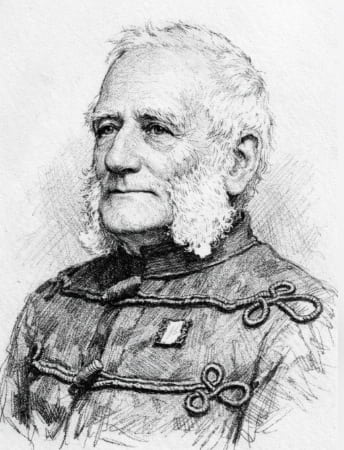
Image: AI created image from a sketch in the Herald (Melbourne) 24 October 1896
Marquis of Hastings (5) 1842
Marquis of Hastings departed Spithead 18 Jully 1842 and arrived in Van Diemen's Land 7 November 1842
The guard consisted of Major Tait, wife and children, Ensign Holditch and 29 rank and file of the 99th regiment, 4 women and children
The barque Moffatt, 821 tons, Gilbert master, departed Plymouth 14th August 1842 and arrived in Hobart 28 November 1842 with male prisoners.
Surgeon-superintendent James Smith R. N.,
Passengers Lieut. F. Finney, 80th regiment, wife and 4 children; 38 rank and file of 99th regiment, 4 women and 5 children
Mount Stewart Elphinstone (2) 1848
Mount Stewart Elphinstone, master Alexander Holton, sailed from Woolwich 29th December and from Gibraltar on 6th February with 240 male convicts.
Passengers Surgeon-superintendent Thomas Heron Keown, Lieutenant Paul, 65th regiment on passage to New Zealand, Ensign Anderson 96th regiment, Rev. Stuart; three sergeants, three corporals and fifty privates, 6 women and 6 children of 99th regiment
North Briton 1843
Barque North Briton, Tyall master, departed Dublin 20th December 1842 and arrived in Hobart 4 April with 178 male convicts.
Passengers - James Leathem Clark R. N., Surgeon-superintendent; Lieut Edward Beatty, 99th Regiment, Assistant Surgeon Smith 99th Regiment, Mrs. Smith and servant; B. Boyle, six convict's children, twenty-nine rank and file, four women and five children of 99th regiment
Lieutenant Beatty died in the Maori wars in 1845
Ratcliffe 1843
The ship Ratcliffe, Garrett, master, departed London 4th and Plymouth 21st July 1843 with troops.
Passengers Captain Wolley, 1st regiment, Captain Sayers 80th regiment, Ensign Garatin, 58th regiment, Captain Edward Pratt, paymaster of 99th regiment, Surgeon Sinclair 51st regiment. Mr. and Miss Isdell, Mrs. and Miss Pratt, Mrs. and Miss Sinclair, fifty-six rank and file of the 51st and two hundred and twenty-five rank and file of the 80th regiment, six women and six children
Richard Webb 1842
Richard Webb, barque, McLachlin master, departed Dublin 5th November 1841 and arrived in Hobart 4 March 1842 with 199 male prisoners.
Passengers Surgeon-superintendent William Rogers; Lieut. William Mair, 30 rank and file of 99th Regiment, 4 women and six children; 5 free settlers and 6 children of prisoners
Born in Scotland in 1806 William Mair was commissioned in the 99th (Lanarkshire) Regiment in 1830. Between 1831 and 1841 he served in Mauritius and Ireland. Mair arrived in Hobart Town in March 1842 as escort for 200 convicts. He soon after moved to Sydney where the rest of the 99th arrived in detachments. In the following year Mair acted as regimental paymaster, and sometimes quartermaster. He transferred to the Mounted Police with the rank of captain in February 1843 and was appointed adjutant of the unit. Find out more about Lieut. William Mair at the Australian War Memorial
Somersetshire (2) 1842
Somersetshire, Motley, master, departed Plymouth 19th January 1842 with 219 male prisoners and arrived in Hobart 30 May 1842.
Passengers for Sydney Brevet Lieut-Colonel John Napper Jackson, 99th Regiment. The guard consisted of 1 serjeant and 41 rank and file of the 50th and 99th Regiments under the command of Ensign R. A. Farrington of the 51st with 3 women and 1 child.
Waterloo (7) 1842 (wrecked)
Waterloo sailed from Sheerness on 1 June 1842 bound for Van Diemen’s Land with 219 convicts, 30 soldiers of the 99th Regiment, five women, and thirteen children. She anchored in Table Bay on 24 August in an exposed position. While the captain was ashore, a severe northerly gale struck on 26–27 August. The top-gallant masts carried away, and at about 11 p.m. on 27 August both anchors parted.
The surgeon, Henry Kelsall, ordered distress flares to be lit and later directed that the convicts be freed from their irons. In the early hours of 28 August the storm reached hurricane force, and Waterloo was driven ashore, broke up, and was destroyed within two hours. With no lifeboats or organised rescue services in Table Bay, 189 people drowned. Newspaper reports state that the surgeon Henry Kelsall was saved by a convict to whom he had shown kindness during the voyage and whose irons he had knocked off
There were 113 survivors, including 16 soldiers, one soldier’s wife, and 76 convicts. The dead comprised 143 convicts, 15 soldiers of the 99th Regiment, 17 women and children, and members of the crew.
The Cape Packet departed Cape of Good Hope on 15th October 1842 and arrived in Hobart 24th November 1842 with 78 male prisoners, survivors of the Waterloo wreck. Surgeon Superintendent Henry Kelsall. The Guard consisted of Lieut. Hext of the 4th or King's Owen; Ensign Leigh and 30 rank and file of the 99th regiment


 GENTLEMEN- A letter appeared in your paper of Saturday last, dated "Newcastle, 23rd Nov., 1843," and signed "Civilian," which has brought before you and the public a number of charges, seriously affecting the character of the military stationed here, who amount to about 200, principally recruits, tied to each other by the strongest ties of friendship ; and who are, with the exception of some half-dozen, perfectly quiet and inoffensive men. With reference to the assault on the Morgans, I have not yet fully ascertained the particulars, and shall not therefore make any remarks upon it at present. As to the military being "daily to be seen in a state of beastly intoxication, indulging in the most vile and filthy language" this statement is untrue: I have every opportunity of observing their conduct, and can without hesitation declare it to be false. A considerable number of them are teetotallers. There is, however, a great hatred existing between the military and the lower orders of the inhabitants of Newcastle, in which "Civilian" seems to participate ; this ill feeling was greatly augmented by the following circumstance. One evening some months back an auction was being held at the Commercial Hotel, then kept by Mr. Groves, when a corporal of the 99th regiment entered the room, a little under the influence of liquor. He had not been in long before he was annoyed by some of the bystanders, by pulling his hair, knocking his cap over his eyes, &c. ; and he was subsequently challenged out to fight. He, as may be expected, accepted the challenge, and left the room ; he had not been a second on the verandah when the mob fell on him, and cruelly murdered him. An inquest was held on the body, and some two or three of the ring- leaders were tried before the coroner for the murder ; but as there could be no evidence found to prove who gave the guilty blow the prisoners were acquitted, and a verdict of " Wilful murder, by some person or persons unknown," was returned by the jury. An account of the murder quickly reached the comrades of the deceased, who, as soon as they heard of it, became enraged, and, no longer capable of governing themselves, and as was natural, sought revenge. About twenty proceeded to the inn, and fell on all at the auction indiscriminately. This is the "riot and destruction of property" Civilian so greatly blames the military for ; but, by taking an impartial view of the affair, it will at once appear that they were not thus outrageous without the greatest provocation. I have related this that you and the public may see that the military are not actuated by any wanton feeling to commit those acts which are painted in such glaring colors by their enemies, and that the blame lies not wholly on their side. Maitland Mercury 2 December 1843
 The barque Kinnear, Lidderdale, master, departed Dublin 10th July with 180 male prisoners and arrived in Hobart 23 October 1842.